
Horsham District Council now forecasts a £5.6m gap by 2029/30 and just £67,000 next year, as grant falls from £7.7m to £1.2m. Band D to rise £5.39.
Horsham District Council expects its budget to fall £5.6 million short in 2029/30, after money from central government drops from £7.7 million this year to £1.2 million. The figures are in a budget update going to Cabinet on 18 November (Medium-Term Financial Strategy update, revised report to Cabinet).
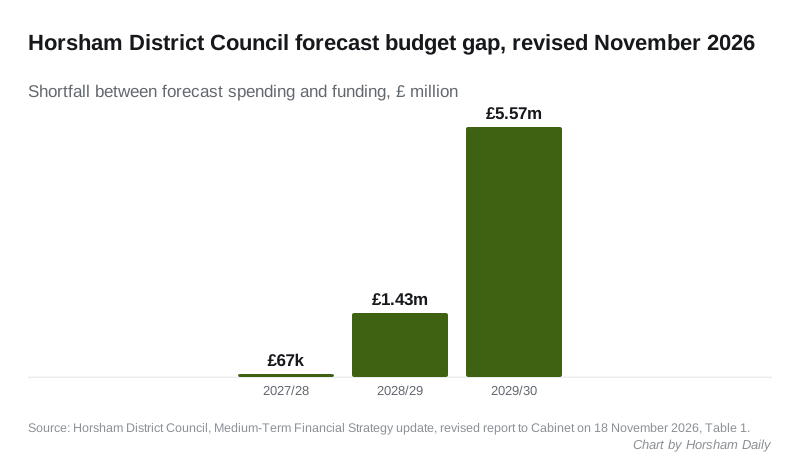
Updated 11 November: the council has republished the report for Cabinet with revised figures. They reflect the government’s new date of 1 April 2029 for replacing the district council. The gap next year shrinks from £737,000 to £67,000, but the gaps in 2028/29 and 2029/30 grow, to £1.43m and £5.57m. The table, chart and figures below are the revised ones. The original October version is still online.
This year is fine. Halfway through 2026/27 the council forecasts a surplus of £344,000, after setting aside £1.6 million for building projects. The gap opens next year and widens fast.
The forecast, year by year
The report’s Table 1 gives the forecast gap between spending and income:
| Year | Spending | Government grant | Council tax | Gap |
|---|---|---|---|---|
| 2026/27 | £20.9m | £7.7m | £12.4m | £344,000 surplus |
| 2027/28 | £22.0m | £6.25m | £12.9m | £67,000 |
| 2028/29 | £23.4m | £5.7m | £13.4m | £1.43m |
| 2029/30 | £23.7m | £1.2m | £14.0m | £5.57m |
Business rates bring in about £2.8m to £2.9m a year on top, which is why the columns do not add up on their own.
Why the money is falling
The government changed how it shares council funding this year, under what it calls the Fair Funding Review. Horsham got a one-off Adjustment Support Grant to soften the change in 2026/27. That grant does not continue, which the council says leaves it about £0.9m a year worse off for good.
The multi-year settlement in February already showed the main grant falling by £1.8m in 2027/28. The council says the formula penalises it in two ways:
- it assumes every council raises council tax by the maximum, although Horsham’s charge is in the lowest quarter nationally
- it assumes councils collect 100% of council tax, when Horsham collected 98.16% in 2025/26, which the report says is the national average
Costs are rising too. The report expects inflation to add about £2.2m to the council’s costs by 2029/30, and pay rises about £2.1m more.
What it means for your council tax
The forecast assumes the council puts up its share of the bill by 2.99% in April 2027, the most it can without a referendum. For a Band D home that is £5.39 more, and it raises £355,000. The council’s Band D charge this year is £180.10 (council tax bands and charges 2026/27), so it would become £185.49.
That is a small slice of the bill. A Band D home in Horsham town pays £2,408.22 in total this year, most of it to West Sussex County Council and Sussex Police. Our council tax bands guide breaks down where it goes.
No savings plan yet
The report says the council is “in reasonable shape financially” but has “a stretched capacity to deliver services with current levels of staff”. Its reserves grew from £24.7m in March 2025 to £27.2m in March 2026, well above the £6m minimum it keeps.
It also says plans for future savings “are not currently being worked on”. The reason given is that the council did not expect to need them before local government reorganisation, which would replace the district council with a larger authority. The government paused those decisions in September; the revised report says they are now expected by early 2027. The report says the council still has to set a balanced budget each year as things stand.
Officers looked at “wholesale cuts” to popular services that councils do not have to provide by law:
- parks and countryside
- planning enforcement
- culture and leisure
They rejected that, because the size of the future gaps is “very uncertain”. Instead the report points to higher fees and charges, and cuts only “should they be needed”.
What else is in the update
- Swan Walk’s closure hit parking income in July and August, but takes have “largely recovered” since access reopened.
- New pressures this year include software licence costs, recycling and waste staffing, and a higher price after the cleaning contract at the Capitol was re-tendered.
- The Capitol will have a full year of shows for the first time since 2023/24 after it reopens on 29 November, and a business plan will aim to cut its subsidy.
- Building projects are costing more than the council raises from selling land. It expects to spend £24.4m this year, with £15.6m (64%) paid from its own budget and reserves.
- The council will stay out of a West Sussex business rates pool in 2027/28. Its modelling does not show a clear benefit, and the revised report adds that the other West Sussex councils did not agree to form one.
- A £100 energy payment for households in council tax bands A to D, announced in the government’s 28 October budget, will be paid through councils from January 2027, the revised report says. The government will fund the extra work.
- Fewer new homes are assumed: about 900 a year from now, against 1,100 in January’s forecast.
What happens next
The council’s Finance and Performance Policy and Scrutiny Committee looks at the report on Monday 2 November at 5.30pm in the Council Chamber at Albery House (meeting agenda). Cabinet takes it on 18 November.
Every figure will change once the government publishes next year’s provisional settlement in December. Cabinet then recommends a budget on 20 January 2027, and Full Council sets the 2027/28 council tax on 22 February 2027.
Have your say